How Digital Products Can Support a Path to Financial Freedom
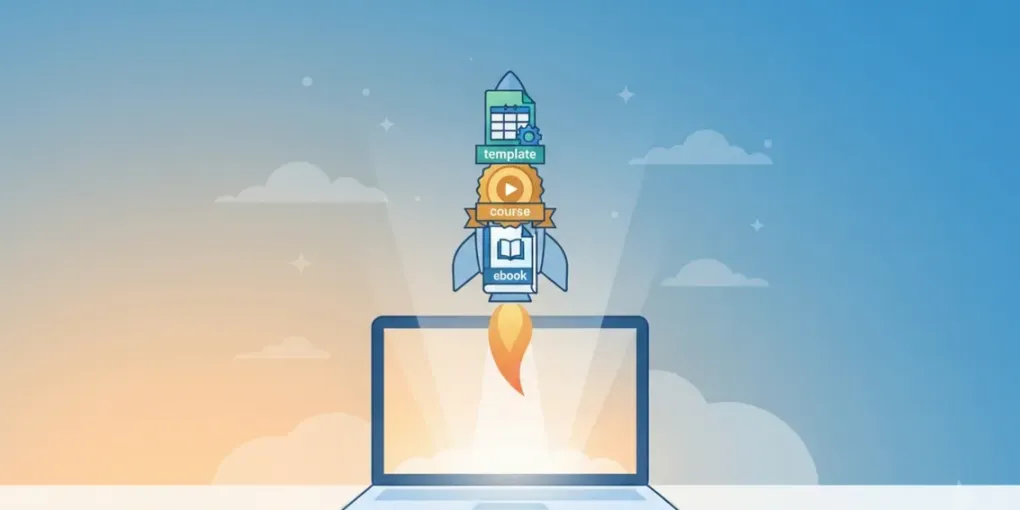
Digital products are downloadable or online resources that can be created and delivered without physical inventory. They include ebooks, courses, templates, software, design resources, and other digital materials.
Because digital products are delivered electronically, they can be distributed without many of the physical processes associated with traditional products, such as manufacturing, packaging, warehousing, and shipping. However, creating a digital product still requires research, development, marketing, customer support, and ongoing improvement.
This article explains how digital products work, provides a practical example, examines their potential benefits and limitations, and outlines what to consider before starting.
Information
A digital product is a product that customers can access or use electronically rather than receive as a physical item.
Common examples include:
- Ebooks and digital guides
- Online courses
- Templates and spreadsheets
- Software and applications
- Plugins and extensions
- Digital artwork
- Stock photography and video
- Audio files
- Downloadable educational resources
- Membership and subscription content
Unlike a physical product, a digital product generally does not need to be manufactured, packaged, stored, or shipped for every individual order.
However, “digital” does not mean “free to create.” Depending on the product, the creator may need to invest time and money in research, writing, design, development, software, testing, marketing, payment processing, customer support, and updates.
Explanation
The digital product business model generally follows a straightforward process:
- Identify a specific audience.
- Find a problem or need that audience has.
- Develop a digital product that addresses that problem.
- Choose a platform or website through which customers can purchase it.
- Set up payment and digital delivery.
- Promote the product to relevant potential customers.
- Collect feedback and improve the product.
The main difference from many physical-product businesses is the delivery process.
For example, an ebook can be written and formatted once and then delivered electronically to customers after purchase. The seller does not need to print, package, and ship a new physical copy for every order.
That can make digital distribution efficient, but it does not remove the need to operate the business. Customers still need a useful product, clear information about what they are buying, reliable delivery, and appropriate support.
Example
Consider a creator who develops a budgeting spreadsheet for people who want to organize their monthly expenses.
The creator could begin by researching what users need from a budgeting tool. After designing and testing the spreadsheet, the creator could offer it through an online store or marketplace.
A customer purchases the template and receives a downloadable copy. If several customers later identify a confusing calculation or suggest a useful feature, the creator can improve the template and release an updated version.
For example, if the product sells for $15, the creator may receive revenue from a sale, but the amount remaining after the transaction is not necessarily $15. Payment-processing fees, platform fees, taxes, refunds, advertising expenses, and other business costs can affect the final result.
This illustrates an important distinction: a digital product can be delivered repeatedly, but sales and profits are not guaranteed.
Benefits
Lower physical infrastructure requirements
Digital products generally do not require physical inventory, warehouses, packaging, or traditional shipping.
This can simplify certain parts of the business compared with selling physical goods.
Digital delivery
Customers can often receive access electronically after completing a purchase.
This can make it possible for a creator to serve customers in different locations without managing physical shipments.
Multiple product formats
Digital products can take many forms.
A writer might create an ebook. A designer might sell templates. A teacher might develop a course. A developer might create software. A photographer might offer digital assets.
The format can therefore be selected according to the creator’s knowledge and the problem being addressed.
Potential for repeat distribution
A digital product can often be delivered to multiple customers without producing a new physical unit for every transaction.
This can make the delivery side of the business more scalable than some physical-product models.
However, distribution scalability does not automatically mean revenue scalability. Demand, marketing, competition, pricing, and product quality still matter.
Easier product updates
Some digital products can be updated without replacing physical inventory.
For example, a spreadsheet, guide, course, or software tool can potentially be revised when information changes or customers identify areas for improvement.
Limitations
Creating a useful product takes time
The absence of physical manufacturing does not eliminate development work.
Research, writing, design, programming, testing, editing, and revisions can require significant time depending on the product.
Sales are not guaranteed
Publishing a digital product does not automatically create customers.
A product needs to address a real need, reach an appropriate audience, communicate its value clearly, and compete with alternative solutions.
Marketing remains important
Potential customers need a way to discover the product.
Depending on the business, this may involve search visibility, useful content, email communication, social media, partnerships, or paid promotion.
Marketing also requires time and, in some cases, additional expenses.
Competition can be significant
Many digital-product categories already contain numerous competing products.
A creator may therefore need to specialize in a particular audience or problem rather than producing a broad product with no clear differentiation.
Customer support may be required
Some digital products require ongoing assistance.
Customers may have questions about using a template, accessing a course, installing software, or understanding the material.
Providing appropriate support can therefore remain part of the business even when product delivery is automated.
Products can become outdated
Information, software, platforms, and customer expectations can change.
A product that is useful today may require updates later. Maintaining quality can therefore become an ongoing responsibility.
Data and Sources
The costs, platform fees, payment-processing rates, and technical requirements associated with digital products can change over time.
For that reason, creators should check the current information provided by the official websites of the platforms and services they intend to use before making business decisions.
The same principle applies to software features, marketplace rules, payment requirements, taxes, and other business conditions.
Rather than relying on outdated articles or unsupported claims about potential earnings, evaluate the actual costs and requirements associated with a specific product and sales channel.
Practical Conclusion
Digital products can provide a practical way to package and distribute knowledge, creative work, software, and other digital resources.
Their potential advantages include digital delivery, flexible formats, fewer physical fulfillment requirements, and the ability to distribute the same digital resource to multiple customers.
At the same time, digital products are not a guaranteed path to income or financial freedom. Creating something useful requires research and development, while attracting customers requires appropriate marketing. Competition, operating costs, customer support, and product maintenance can also affect the results.
For someone considering this business model, a practical starting point is to identify a specific audience and a clearly defined problem. Research existing solutions, create a focused product, test it with appropriate users, and improve it based on useful feedback.
The strongest foundation is not the promise of quick or passive income. It is a useful product that solves a real problem for a clearly defined audience.